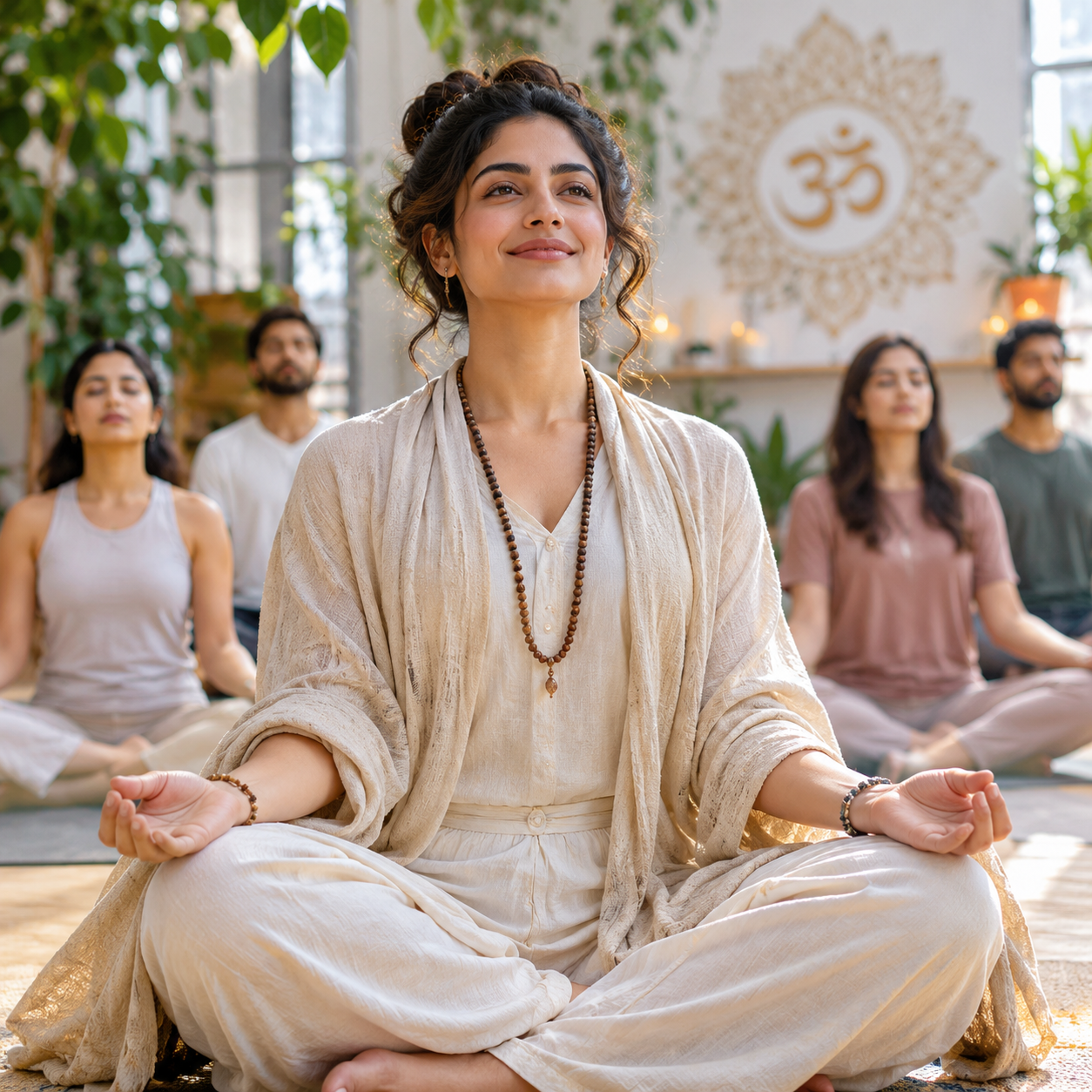
Meditation is now practised in homes, yoga studios, workplaces, community groups and online classes. As more people explore it for reflection, focus and personal development, some regular practitioners begin to wonder whether they could guide others, too.
Becoming a meditation teacher can be a meaningful learning path and, for some, the beginning of a professional direction. It involves more than knowing a technique or speaking in a soothing voice. A responsible teacher develops a personal practice, understands different approaches, learns to plan and guide sessions, and recognises the limits of their role.
You do not need to be an expert before you begin learning how to teach meditation. You do need curiosity, consistency, humility and a willingness to practise. This guide explains the skills, training choices and practical steps that can help you move from personal practice towards teaching with care.
If you are already exploring a structured route into teaching, you can review Spiritual Light's Meditation Teacher Training programme alongside the guidance in this article.
What Does a Meditation Teacher Actually Do?
A meditation teacher helps people learn and practise meditation. Depending on their training and setting, they may introduce a technique, explain how to sit comfortably, guide attention with spoken instructions, allow periods of silence and help participants reflect on their experience.
A teacher may plan beginner sessions, explain a practice in accessible language, offer posture options, answer general questions and create an environment where nobody is pressured to share personal experiences. They adapt their instructions to the group without making medical promises.
The role is not to control what participants experience or interpret every sensation as a special sign. People respond differently. A good teacher makes room for those differences and offers clear, non-judgmental guidance.
Can Anyone Become a Meditation Teacher?
Many people can begin training to teach meditation. A particular academic degree or previous career is not universally required. Entry requirements vary between providers, so check them before enrolling.
Beginners can learn the foundations, but teaching responsibly takes preparation. Build a regular personal practice, study more than one method, receive feedback and practise guiding short sessions before leading a group independently.
If a participant becomes distressed, do not try to act as a therapist. Pause the exercise, respect the person's choice to stop and, when appropriate, encourage support from a qualified healthcare or mental-health professional.
What Qualifications and Personal Qualities Are Useful?
There is no single qualification for every meditation teaching context. Some organisations require completion of a defined programme; others may consider experience, supervised practice or relevant professional background. A certificate can document learning, but it does not automatically establish universal accreditation or clinical competence.
Useful foundations include:
- Personal practice: Experience helps you understand the instructions you give and the challenges beginners may face.
- Structured learning: Study techniques, session design, ethics and the responsibilities of a teacher.
- Teaching practice: Rehearse, receive feedback and improve your timing and clarity.
- Communication: Explain ideas simply, listen carefully and avoid imposing beliefs.
- Professional boundaries: Know what you are trained to offer and when to refer someone elsewhere.
Different Types of Meditation a Teacher Should Understand
Meditation is a broad term covering practices with different aims and instructions. A developing teacher should understand several approaches and become competent in the methods they plan to teach.
Mindfulness meditation
Mindfulness involves paying attention to present-moment experience, such as the breath, bodily sensations, sounds or thoughts, while practising a less reactive attitude. Participants are invited to notice when attention wanders and gently return to the chosen focus.
Breath-awareness meditation
This practice uses the natural sensation of breathing as an anchor for attention. Beginners should not be told to force, hold or change their breathing unless the teacher has suitable training and the practice specifically calls for it. Comfortable, natural breathing is a sensible starting point.
Guided meditation
The teacher offers spoken prompts throughout some or all of a session. Guidance may direct attention to the body, breath, sounds or a simple theme. Good instructions leave enough silence for participants to practise.
Body-scan meditation
A body scan invites attention to move gradually through areas of the body, noticing sensations without needing to change them. Participants should be free to skip an area, keep their eyes open or stop if the practice feels uncomfortable.
Loving-kindness meditation
This approach uses phrases or intentions associated with goodwill and care, directed towards oneself and, in some versions, other people. Present it as an invitation rather than requiring participants to feel a particular emotion.
Essential Skills Required to Teach Meditation
Knowing a technique is only one part of teaching. A capable instructor combines subject knowledge with practical facilitation.
- Clear instruction: Use short, specific prompts. Instead of saying “empty your mind,” explain what to do when thoughts appear.
- Good pacing: Allow time for people to follow instructions. Use silence deliberately.
- Flexibility: Notice when a group needs a simpler explanation, a posture change or a pause.
- Inclusive facilitation: Offer suitable options. Do not assume everyone can sit cross-legged or close their eyes.
- Listening: Invite questions without pressuring people to disclose private information.
- Ethical judgement: Respect confidentiality within your setting and never promise guaranteed results.
- Self-awareness: Recognise your preferences and biases. The class should serve participants, not become a platform for the teacher's personal beliefs.
Step-by-Step: How to Become a Meditation Teacher
If you are wondering how to become a meditation teacher, use this sequence as a practical starting point. The time required depends on your schedule, previous experience and the depth of training you choose.
Step 1: Establish a personal practice
Choose a beginner-friendly method and practise regularly for a manageable period. Start with a few minutes if necessary. Notice what helps you stay consistent; do not treat the number of minutes as a measure of personal worth.
Step 2: Learn the foundations
Study basic principles, attention, posture, breath awareness, common distractions and the differences between methods. Learn to distinguish traditional teachings, contemporary secular approaches and personal opinions.
Step 3: Explore different techniques
Try several approaches with reputable teachers or structured resources. Observe how instructions differ and which methods you understand well enough to explain. Do not assume one technique suits everyone.
Step 4: Choose structured meditation teacher training
Compare course content, trainer experience, learning format, practice opportunities, assessment and certificate wording. Look for a programme that teaches both the practice and the responsibility of guiding others.
Step 5: Practise teaching
Write a short session plan and guide a willing friend or small practice group. Explain that you are learning. Ask whether the instructions were clear, the pace comfortable and the pauses sufficient.
Step 6: Reflect and refine
After each session, note what worked and what you would change. Practise speaking naturally, reducing unnecessary words and offering options without overwhelming participants.
Step 7: Define your scope and audience
Decide whether you want to guide beginners, support yoga classes, offer workplace sessions or teach online. Be clear about the methods you are trained to teach and the groups for whom your experience is appropriate.
Step 8: Continue learning
Teaching is not the end of study. Keep practising, seek feedback and refer participants to qualified professionals when their needs go beyond meditation instruction.
Ready to Take the Next Step Towards Becoming a Meditation Teacher? Explore structured training, learn practical teaching foundations and study at your own pace.
Explore Meditation Teacher Training
What Is Meditation Teacher Training?
Meditation teacher training is a structured learning experience designed to help participants understand meditation and develop the ability to guide others. Some programmes introduce foundational methods; others include extensive supervised teaching, assessment and specialist study.
A useful meditation instructor training programme helps learners move through three stages: understanding a practice, experiencing it personally and learning how to explain and facilitate it. Watching demonstrations alone is rarely enough; learners benefit from opportunities to practise giving instructions and reflect on their teaching.
Read the curriculum and understand what the certificate represents. A course-completion certificate confirms what its issuer says the learner has completed. It should not be confused with a government licence, clinical qualification or external accreditation unless those claims are independently verified.
For a practical example of a self-paced programme, view the Meditation Teacher Training course details and check whether its format fits your learning needs.
What Should a Good Meditation Certification Programme Include?
A well-designed meditation certification course should be transparent about its learning outcomes and limitations. Consider whether it includes:
- Foundations and purpose of relevant meditation approaches.
- Demonstrations and guided practice.
- Breath awareness, mindfulness and techniques within the programme's scope.
- Session planning, opening and closing a class, and guiding silence.
- Communication, inclusive options and responding to questions.
- Ethics, consent, confidentiality and professional boundaries.
- Guidance on distress, stopping a practice and referring to qualified support.
- Teaching practice, feedback or an appropriate assessment method.
- Clear details about duration, access, fees, trainer and certificate issuer.
Ask what “certified” means in the provider's context. Check who issues the certificate, what completion requires and whether external recognition is specifically documented. Avoid choosing a course based only on impressive-sounding labels.
Online Versus In-Person Meditation Teacher Training
Both online and in-person programmes can provide a useful foundation. Their value depends on the curriculum, trainer experience, opportunities to practise teaching and the support available. Consider how you learn best, the time you can commit and whether the programme gives you enough opportunity to develop practical skills.
Online meditation teacher training
Online training can make learning accessible from different locations and often allows you to study around work, family and other commitments. Prerecorded lessons may be replayed, while live online sessions can provide discussion and interaction without travel. This format can be especially convenient if a suitable local programme is not available.
The limitations depend on the course design. A programme made up only of recorded videos may offer little individual feedback, supervised practice or direct observation of your teaching. Live online sessions can help, but you should check how questions are answered, whether you practise guiding sessions and how assessment or feedback is provided. You will also need a reliable internet connection and a quiet place to study and practise.
In-person meditation teacher training
In-person training allows learners and trainers to meet in the same room. Participants may find it easier to practise guiding a group, observe demonstrations closely, ask questions in the moment and receive direct feedback on their communication, timing and presence. Group practice can also help learners become more comfortable facilitating sessions with other people.
In-person programmes usually require travel and attendance at scheduled times. This may involve additional costs and can be difficult to combine with work or family responsibilities. The quality of the experience still depends on the curriculum and trainer; attending in person does not automatically mean that a programme includes sufficient teaching practice or assessment.
How to choose between the two
Compare the actual learning experience rather than choosing by format alone. Review the curriculum, trainer background, teaching-practice requirements, feedback arrangements, ethics and safety content, assessment method, schedule and total cost. Ask whether you will have opportunities to guide practice and receive useful feedback.
Choose a format that you can complete consistently and that gives you enough support to develop the skills you need. If you are considering an online course, check how interaction and practice are handled. If you are considering an in-person course, check the amount of individual guidance and practical teaching included. Neither format is universally superior; a well-designed programme in either format can support meaningful learning.
If you are comparing online learning options, see the 12-session Meditation Teacher Training programme by Spiritual Light for its current course format and access details.
How to Conduct Your First Meditation Class
Your first class does not need to be complicated. A short, well-planned session is often more useful than an ambitious one.
- Welcome participants: Explain the session length, the practice and that participation is voluntary.
- Offer comfortable options: Invite people to sit on a chair or cushion, adjust posture and keep their eyes open or closed.
- Set expectations: Explain that minds wander; nobody needs to force stillness or achieve a special experience.
- Guide a simple practice: Invite participants to notice the natural breath for a few minutes and gently return attention when it wanders.
- Allow silence: Give people time to practise without constant instructions.
- Close gradually: Invite awareness of the room before participants move.
- Invite optional reflection: Ask what they noticed without interpreting their experience or requiring anyone to speak.
Keep the first session modest, perhaps 10 to 15 minutes of practice within a longer welcome and closing. Make it clear that anyone may pause or stop. If someone experiences discomfort, respond calmly; do not diagnose or promise a cure.
Career Opportunities for Trained Meditation Teachers
People who develop meditation teaching skills may explore different settings, depending on their competence, experience and local requirements. These opportunities can take time to develop. Training may provide a foundation, but finding participants, building trust and establishing a sustainable teaching routine require planning and consistent effort.
Independent meditation classes
You may organise small beginner classes in a rented room, a community space or another suitable venue. Start with a clearly defined audience and a simple session format, such as an introductory mindfulness or breath-awareness class. Consider venue availability, rental costs, group size, accessibility, scheduling, promotion and participant feedback. Explain your training and the scope of the class honestly, and avoid presenting meditation instruction as medical or psychological treatment.
Yoga and wellness studios
Yoga studios and wellness centres may include meditation as a standalone class or as part of a broader programme. Contact studio owners or programme coordinators with a concise description of the methods you are trained to teach, your teaching experience and a sample session plan. Ask about their instructor requirements, class schedules, payment arrangements, insurance or documentation expectations and whether they expect an audition or trial class. Each studio sets its own criteria, so a certificate should not be assumed to guarantee a teaching position.
Online meditation teaching
Online teaching can include live group sessions, individual instruction within your competence or recorded guided practices. It can help you reach learners beyond your immediate area, but it also requires clear audio, a stable connection, a suitable platform and a plan for questions and participant privacy. Decide how learners will register, receive joining details and contact you. For live classes, explain how participants can pause or leave a session if they feel uncomfortable.
Corporate and workplace wellness sessions
Some organisations arrange wellbeing activities for employees and may consider introductory meditation sessions as one option. A teacher exploring this setting should be able to describe the session's purpose in practical, non-clinical terms and adapt the format to the workplace schedule. Be prepared to discuss the organisation's vendor or facilitator requirements, participant privacy, accessibility, group size and feedback process. Do not promise improvements in productivity, stress or health; describe the practice and its limits accurately.
Community meditation programmes
Community centres, local groups, libraries, educational settings or nonprofit organisations may host accessible meditation programmes. These settings can involve mixed levels of experience and varied needs. Clarify who the programme is intended for, whether participation is free or fee-based, who provides the venue, how sessions are promoted and what safeguarding or organisational policies apply. Keep the practice inclusive and make participation voluntary.
Developing an independent meditation teaching practice
An independent practice usually grows gradually. You might begin with occasional classes, gather feedback, refine your session plans and build a clear description of the services you offer. Practical tasks include setting a schedule, choosing suitable venues or online tools, maintaining basic records, communicating fees and cancellation terms, and understanding any local business, tax, insurance or professional requirements that apply to you.
Build your reputation through reliable teaching, transparent information and respectful relationships rather than income or outcome promises. Keep learning, stay within your training and refer participants to qualified professionals when their needs fall outside the scope of meditation instruction.
When you are ready to compare a specific training option, explore Spiritual Light's Meditation Teacher Training course and review the curriculum and certificate details.
How to Choose the Right Meditation Teacher Training Course
Before enrolling, compare programmes carefully:
- Curriculum: Does it explain what you will learn, not just promise transformation?
- Teaching practice: Will you practise guiding meditation?
- Trainer background: Are the trainer's experience and qualifications clearly described?
- Ethics and safety: Does the course explain boundaries and appropriate referrals?
- Certificate details: Is the issuer named, and are completion requirements clear?
- Learning format: Are lessons live, recorded or blended, and does the schedule suit you?
- Support: Can you ask questions and receive feedback?
- Transparency: Are fees, access period, refund terms and limitations easy to find?
- Realistic claims: Does the provider avoid guarantees of employment, income or medical outcomes?
Read the course information rather than relying only on advertisements. If important details are missing, ask the provider before paying.
Frequently Asked Questions
1. How long does it take to become a meditation teacher?
There is no universal timeline. It depends on the programme, your existing practice, the time you can devote to study and whether supervised teaching or assessment is included. Focus on developing competence rather than rushing towards a certificate.
2. Can beginners become meditation teachers?
Yes. Beginners can start with foundational study and build their skills step by step. A short introduction alone may not be enough preparation to teach every technique or group.
3. Do I need to practise meditation before teaching?
A personal practice is strongly useful. It gives you direct experience of following instructions, working with distraction and noticing what makes a session accessible. Continue practising while you learn to teach.
4. Is meditation teacher certification necessary?
Requirements differ by provider, employer, location and teaching context. A certificate can show that you completed a particular programme, but no single certificate automatically qualifies someone for every setting. Check the expectations of the people or organisations you intend to serve.
5. Can I become a meditation teacher online?
Yes. Online training can be practical, especially when lessons are structured and include opportunities to practise teaching. Check how feedback, questions and assessment are handled before enrolling.
6. What skills should a meditation teacher have?
Important skills include clear communication, patient pacing, listening, inclusive facilitation, session planning, ethical judgement and awareness of professional boundaries. Personal practice and willingness to keep learning are also valuable.
7. What types of meditation can I teach?
Depending on your training, you may guide mindfulness, breath awareness, guided meditation, body scans, loving-kindness or concentration practices. Teach only methods you understand and can facilitate responsibly.
8. Can yoga instructors also teach meditation?
Yoga instructors may build on their teaching and group-facilitation experience by studying meditation. They should still learn the specific methods they intend to teach and check whether additional training is appropriate for their setting.
9. Can meditation teachers conduct online classes?
Yes. Teachers can guide live online groups or create recorded practices. Consider accessibility, clear audio, participant privacy and a suitable way for learners to ask questions. Online teaching still requires preparation and boundaries.
10. What should I look for in a meditation teacher training course?
Look for a clear curriculum, experienced trainers, practical teaching opportunities, ethical guidance, transparent certificate details, suitable learning support and realistic claims. Compare what is included rather than choosing by title alone.
Begin Your Meditation Teaching Journey with Spiritual Light
If you are ready to move from personal meditation practice towards learning how to guide others, structured training can help you build a foundation. Explore the Meditation Teacher Training course by Spiritual Light to review whether its learning format suits your goals.
The course includes 12 prerecorded training sessions, self-paced learning and lifetime access. The certificate is issued by Spiritual Light Society Institute. Review the course details and decide whether the programme matches the preparation you are seeking.
Explore Meditation Teacher Training
Teaching meditation begins with learning to practise attentively, explain clearly and respect each participant's experience. Take the time to build those foundations. A thoughtful, responsible approach is a stronger starting point than a promise to have all the answers.